
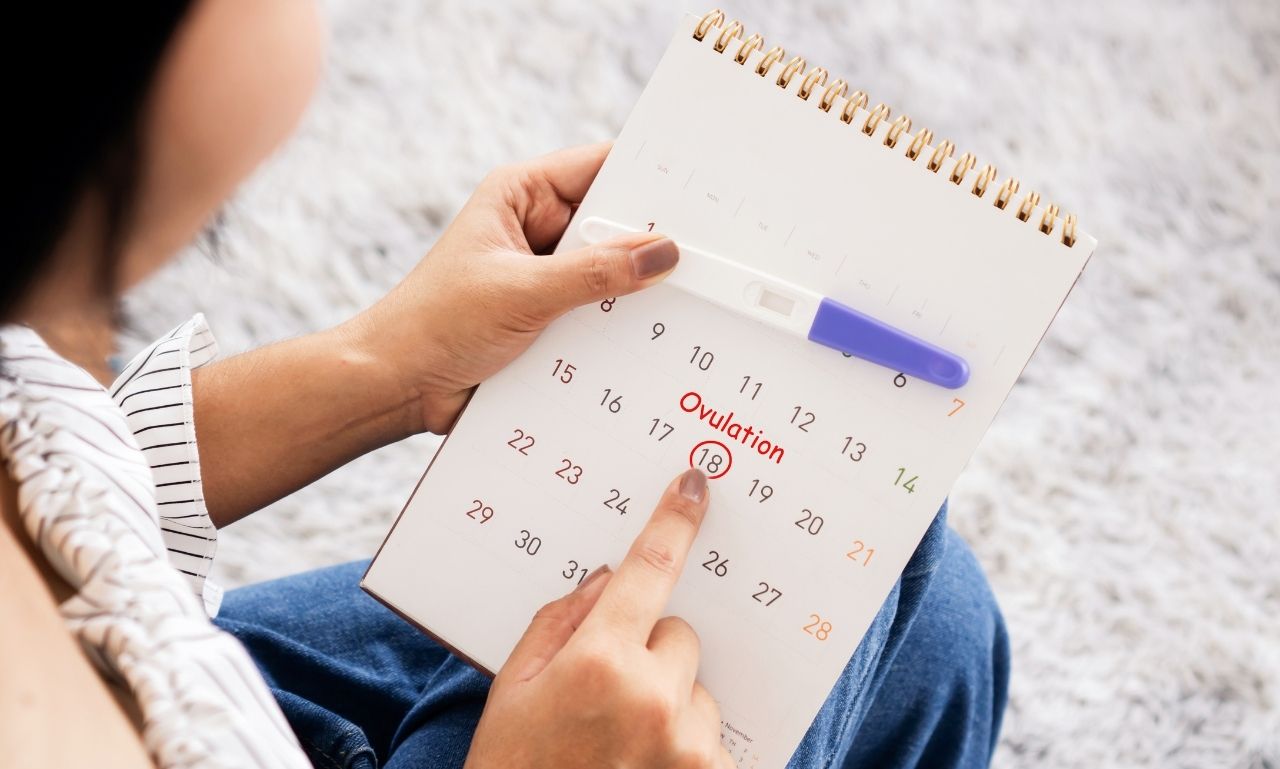
A regular period often feels reassuring. It suggests that the body is following a predictable rhythm and that reproductive health is on track. Yet many women are surprised to learn that menstrual bleeding and ovulation do not always move in lockstep. That’s why the question, can stress delay ovulation even if your period is regular, comes up so often among those tracking fertility or trying to understand changes in their cycle.
The short answer is yes. Stress can affect the timing of ovulation without necessarily disrupting the regularity of your period. Understanding how that happens requires looking beyond the calendar and into the hormonal system that controls reproduction.
Why a Regular Period Doesn’t Guarantee Perfectly Timed Ovulation
Many people assume that if their period arrives every 28 to 30 days, ovulation must be occurring on the same day each month. In reality, the menstrual cycle is far more dynamic.
Ovulation is controlled by a series of hormonal signals that begin in the brain and travel through the reproductive system. Menstruation happens later in that process. Although the two events are connected, one does not always reflect the exact timing of the other.
A woman can have regular monthly bleeding while experiencing subtle shifts in ovulation timing. In some cycles, an egg may be released a few days later than expected. The period may still arrive close to its usual date, making the delay difficult to detect without fertility tracking.
This is one reason fertility specialists often encourage women to pay attention to ovulation signs rather than relying solely on cycle length.
Can Stress Delay Ovulation Even If Your Period Is Regular?
The relationship between stress and ovulation is well established in reproductive medicine. Stress affects the hormonal communication network that helps regulate fertility.
When the body experiences stress, it releases hormones designed to help manage perceived challenges. These hormonal changes can influence the reproductive system and alter the timing of ovulation.
For some women, the effect is minor. Ovulation may occur a day or two later than usual. For others, particularly during periods of intense emotional or physical strain, the delay can be more significant.
What makes this confusing is that the menstrual cycle often adapts. A delayed ovulation does not always lead to an obviously delayed period. As a result, many women assume everything is functioning normally when ovulation timing has actually shifted.
How Stress Changes Hormonal Communication
The reproductive system depends on precise coordination between the brain and the ovaries.
The process begins in the hypothalamus, a small region of the brain responsible for regulating numerous bodily functions. The hypothalamus sends signals that trigger the release of reproductive hormones. These hormones stimulate follicle development and eventually lead to ovulation.
Stress can interfere with this process.
The Role of Cortisol
Cortisol is often called the body’s primary stress hormone. During challenging periods, cortisol production increases to help the body respond to pressure.
Short-term increases are normal and healthy. Problems tend to arise when stress becomes chronic.
Elevated cortisol levels can affect the release of reproductive hormones, including follicle-stimulating hormone (FSH) and luteinizing hormone (LH). These hormones are critical for preparing and releasing an egg.
When communication between these hormones becomes less predictable, ovulation may occur later than usual.
Why the Body Prioritizes Survival
From a biological standpoint, reproduction is not always the body’s highest priority.
When the brain interprets a situation as stressful, it may temporarily direct energy toward survival-related functions. Although modern stress often stems from work deadlines, financial concerns, family responsibilities, or emotional challenges, the body’s response remains rooted in ancient biological mechanisms.
The result can be a delay in ovulation while other aspects of the cycle continue relatively normally.
Types of Stress That May Affect Ovulation
Stress is not limited to emotional strain. The body reacts to many different forms of pressure.
Emotional stress is perhaps the most obvious example. Relationship difficulties, workplace conflicts, grief, anxiety, and major life changes can all influence hormonal balance.
Physical stress can have similar effects. Illness, injury, poor sleep, overtraining, and significant calorie restriction place demands on the body that may alter reproductive function.
A woman training for a marathon while sleeping poorly and managing a demanding job may experience the combined effects of several stressors at once.
The body does not necessarily distinguish between emotional and physical stress. Both can affect the hormonal pathways involved in ovulation.
Signs That Stress May Be Delaying Ovulation
Most women do not feel ovulation directly. Instead, they notice changes that suggest it is approaching.
When ovulation occurs later than usual, these signs often shift as well.
Changes in Cervical Mucus
Fertile cervical mucus typically becomes clear, slippery, and stretchy shortly before ovulation.
Women who monitor these changes may notice that fertile mucus appears several days later during stressful periods.
Later Positive Ovulation Tests
Ovulation predictor kits detect the surge in luteinizing hormone that occurs before ovulation.
A woman who usually receives a positive result around day 14 may suddenly see it on day 18 or 19 during a particularly stressful month.
Shifts in Basal Body Temperature
Basal body temperature rises slightly after ovulation. Tracking temperatures over several months can reveal whether ovulation timing is changing.
Slightly Longer Cycles
Although periods may remain fairly regular, some women notice a cycle that extends by a few days following a stressful event or difficult period in their lives.
Can Stress Cause You to Miss Ovulation Entirely?
In some cases, stress may do more than delay ovulation.
Anovulation occurs when the ovary does not release an egg during a cycle. This can happen occasionally, even in otherwise healthy women.
Severe emotional stress, significant illness, extreme exercise, and rapid weight loss are among the factors that can contribute to anovulatory cycles.
One of the most confusing aspects of anovulation is that bleeding may still occur. A woman may assume she had a normal cycle because she experienced a period, even though ovulation never took place.
An occasional anovulatory cycle is not unusual. Repeated episodes warrant medical evaluation.
What Delayed Ovulation Means for Fertility
For women trying to conceive, ovulation timing matters more than period timing.
Pregnancy becomes possible only when sperm are present during the fertile window surrounding ovulation. If ovulation occurs later than expected, relying on average cycle predictions can result in missed opportunities.
Delayed ovulation does not necessarily reduce fertility. It simply changes the timing of the fertile window.
Consider a woman who normally ovulates on day 14. During a stressful month, she may ovulate on day 19 instead. If she assumes ovulation occurred on its usual schedule, she could overlook her most fertile days.
This is why fertility awareness methods and ovulation tracking tools can provide valuable insight.
How to Confirm Whether You’re Ovulating
Because periods alone cannot confirm ovulation, many women use additional methods to better understand their cycle.
Ovulation predictor kits remain one of the most accessible options. They help identify the hormone surge that occurs before egg release.
Basal body temperature tracking offers another useful approach. While it does not predict ovulation, it can confirm that ovulation likely occurred.
Monitoring cervical mucus can also provide important clues about fertility.
In some situations, medical testing may be appropriate. Blood tests that measure progesterone levels can help confirm ovulation. Fertility specialists may also use ultrasound monitoring to track follicle development.
These tools become especially useful when a woman is actively trying to conceive or experiencing unexplained fertility challenges.
Other Reasons Ovulation May Be Delayed
Stress is a common cause of delayed ovulation, but it is not the only explanation.
Several medical conditions can affect reproductive hormones and alter cycle timing.
Polycystic ovary syndrome, commonly known as PCOS, is among the most frequent causes. Women with PCOS often experience irregular ovulation due to hormonal imbalances.
Thyroid disorders can also influence reproductive function. Both underactive and overactive thyroid conditions may disrupt normal ovulation patterns.
Significant weight changes sometimes affect fertility as well. Rapid weight loss, restrictive dieting, and substantial weight gain can all influence hormone production.
Perimenopause represents another potential factor. As women approach menopause, hormonal fluctuations often become more pronounced, leading to changes in ovulation timing.
Because several conditions share similar symptoms, persistent changes should not automatically be attributed to stress alone.
Supporting Healthy Ovulation During Stressful Times

No one can eliminate stress completely. Life inevitably brings periods of uncertainty and pressure. The goal is not to avoid stress altogether but to improve the body’s ability to manage it.
Sleep is one of the most powerful tools available. Consistently poor sleep can increase cortisol levels and affect hormone regulation.
Regular physical activity also helps support overall hormonal health. Moderate exercise often provides benefits without placing excessive demands on the body.
Nutrition plays an important role as well. A balanced diet helps ensure that the body has the resources needed to maintain normal reproductive function.
Some women find relief through mindfulness practices, counseling, meditation, or stress-management techniques. Others benefit from setting healthier boundaries around work and personal responsibilities.
Small changes may not eliminate stress overnight, but they can help create an environment that supports more stable hormonal function over time.
When It’s Time to Speak With a Healthcare Professional
A delayed ovulation during a stressful month is usually not a cause for alarm. However, persistent changes deserve attention.
Women should consider speaking with a healthcare provider if they experience consistently long cycles, repeated missed periods, difficulty conceiving, or symptoms that suggest an underlying hormonal disorder.
Professional evaluation can help determine whether stress is the primary factor or whether another medical condition is contributing to cycle changes.
Early assessment often provides reassurance and can prevent months of unnecessary uncertainty.
Conclusion
So, can stress delay ovulation even if your period is regular? Yes, it can. A regular menstrual cycle does not always mean ovulation is occurring at the same time each month. Stress influences the hormonal signals that guide reproduction, and those changes may postpone ovulation without creating obvious disruptions in menstruation. For women tracking fertility or trying to conceive, understanding this distinction can provide valuable insight into how the body responds to both emotional and physical stress. Paying attention to ovulation signs rather than relying solely on period dates offers a more complete picture of reproductive health.
Also Read: How Long Does It Take Fertility to Return After Stopping Birth Control?
FAQs
Yes. Ovulation may occur later than usual while your period still arrives close to its normal schedule.
The delay varies. For some women, it may be only a few days. More significant stress can cause longer delays.
Anxiety can influence the hormones involved in ovulation. While anxiety alone does not cause infertility, it may affect cycle timing.
Yes. Delayed ovulation does not prevent pregnancy. It simply shifts the fertile window later in the cycle.
