
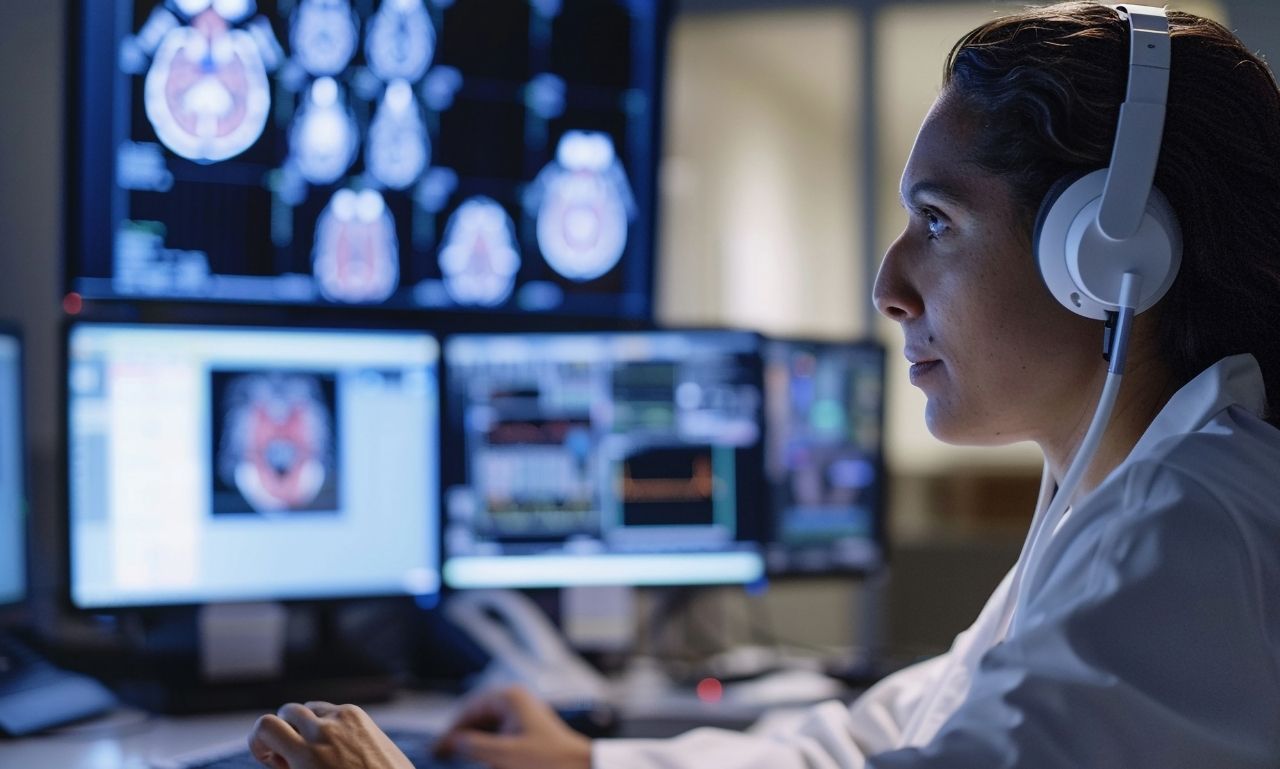
Healthcare has long been built around diagnosing illness after symptoms appear. That approach saves lives, but it often means valuable time has already been lost. As advances in predictive healthcare continue, many people are asking: Can AI Predict Health Problems Before Symptoms Develop? Increasingly, research suggests that artificial intelligence can spot subtle warning signs hidden in medical data, creating opportunities to identify health risks much earlier than traditional methods allow.
Why Early Disease Detection Has Always Been Medicine’s Biggest Challenge
Many serious illnesses begin quietly.
Heart disease often develops over years before a patient experiences chest pain. Certain cancers can grow undetected for long periods. Even conditions such as diabetes and kidney disease may cause subtle changes long before someone notices a problem.
The difficulty is that traditional healthcare tends to capture snapshots rather than continuous stories. A patient visits a clinic, has a checkup, receives test results, and then leaves. Months may pass before the next appointment. Between those visits, countless biological changes occur without being measured.
This gap has always limited preventive medicine. Doctors can identify risk factors, but predicting exactly who will become sick and when has been far more difficult. That is where artificial intelligence is attracting attention. It offers a way to connect thousands of small signals that might otherwise remain invisible.
Why Symptoms Often Appear Late
Symptoms are not always the first sign of disease. In many cases, they are evidence that a condition has already progressed.
A tumor may exist before pain develops. Blood vessels may narrow years before a heart attack occurs. Cognitive decline often begins well before memory problems become obvious.
The earlier these changes can be identified, the greater the opportunity for intervention.
Can AI Predict Health Problems Before Symptoms Develop?
The short answer is yes, although not with perfect certainty.
Artificial intelligence can identify patterns associated with future health risks. In some situations, those patterns emerge months or even years before a diagnosis. What makes this possible is the sheer amount of information modern AI systems can process.
A physician might review a patient’s history, recent blood work, and current symptoms. An AI model can compare that same information against millions of similar cases. It can detect relationships too subtle for humans to spot consistently.
That does not mean the technology predicts the future. Rather, it estimates probabilities. It identifies individuals whose health profiles resemble those who later developed a specific condition.
This distinction matters. AI is not replacing diagnosis. It is improving risk detection.
How Artificial Intelligence Identifies Hidden Health Risks
The power of predictive healthcare comes from pattern recognition.
Every person generates enormous amounts of health data. Medical records, prescription histories, laboratory tests, imaging scans, lifestyle habits, sleep patterns, and genetic information all contain clues about future health outcomes.
On their own, many of these clues seem insignificant.
A slight increase in resting heart rate may not raise concern. Neither might a small change in sleep quality. Yet when several subtle changes occur together, they can signal the early stages of a problem.
Machine learning models excel at finding these connections.
The Data Behind Predictive Models
Most healthcare algorithms learn from several sources:
- Electronic health records
- Medical imaging
- Laboratory results
- Genetic testing
- Wearable device data
- Patient demographics
- Lifestyle information
The broader and more accurate the dataset, the stronger the prediction tends to become.
Diseases AI May Detect Before Symptoms Become Noticeable
Not every illness leaves an early digital trail. Some do.
Cardiovascular disease has become one of the strongest examples. Researchers have developed models capable of identifying elevated heart disease risk through combinations of blood pressure trends, cholesterol levels, imaging results, and wearable device measurements.
Cancer detection is another rapidly advancing field. Artificial intelligence can examine medical images and identify suspicious patterns that might otherwise escape attention. In breast cancer screening, several studies have shown AI systems matching or even exceeding human performance in specific tasks.
Neurological disorders present another promising area. Researchers have found that subtle changes in speech, movement, and brain imaging may indicate future cognitive decline long before traditional symptoms emerge.
Other areas showing potential include:
- Type 2 diabetes
- Chronic kidney disease
- Stroke risk
- Heart failure
- Sepsis
- Certain mental health disorders
The common factor is data. Conditions that generate measurable biological changes are often easier to predict.
The Growing Influence of Smartwatches and Wearables
A decade ago, most people viewed fitness trackers as lifestyle gadgets. Today, many healthcare researchers see them differently.
Wearable devices collect information continuously. They monitor heart rate, activity levels, sleep quality, oxygen saturation, and other physiological signals throughout the day.
This creates something healthcare has rarely had before: a constant stream of real-world health data.
A patient may visit a doctor twice a year. A smartwatch collects information every minute.
That difference is significant.
Researchers have discovered that changes in heart rate patterns can sometimes appear before users report symptoms of illness. Similar findings have emerged in studies involving respiratory infections and heart rhythm abnormalities.
Continuous Monitoring Changes the Equation
Traditional healthcare often relies on isolated measurements.
Wearables provide context. They reveal trends rather than single moments. A gradual decline in sleep quality over several months may carry more meaning than one poor night’s sleep.
Artificial intelligence helps make sense of these long-term patterns.
How AI Is Transforming Cancer Detection
Few areas of medicine benefit more from early detection than cancer care.
For decades, radiologists have relied on training and experience to interpret scans. Artificial intelligence adds another layer of analysis. Algorithms can review enormous numbers of images and identify subtle abnormalities that may be difficult to detect consistently.
The goal is not to replace specialists. The goal is to reduce missed findings and improve screening accuracy.
This approach is already influencing breast cancer screening programs, lung cancer detection initiatives, and pathology workflows.
What makes cancer detection particularly interesting is timing. The earlier a tumor is discovered, the greater the range of available treatment options. Even modest improvements in detection can have meaningful clinical consequences.
Personalized Medicine Is Making Prediction More Useful

One challenge in healthcare is that people rarely fit neatly into averages.
Two patients with similar lifestyles may experience very different health outcomes. Family history, genetics, environment, and countless other factors influence risk.
Artificial intelligence helps address this complexity.
Instead of relying entirely on population-level recommendations, predictive systems can generate individualized assessments. A patient with a strong genetic predisposition to heart disease may require a different prevention strategy than someone whose primary risk comes from lifestyle factors.
This shift toward personalized medicine may ultimately become one of AI’s most important contributions.
The Role of Genetic Information
Genetic testing continues to become more accessible and affordable.
AI systems can analyze vast genetic datasets and identify patterns linked to disease susceptibility. While genetics alone rarely determine outcomes, combining genetic information with clinical data creates a more complete picture of individual risk.
The Benefits of Predicting Disease Earlier
The value of prediction becomes clear when considering how many chronic diseases develop.
Most do not appear overnight. They progress gradually, often over years.
Earlier identification creates opportunities that simply do not exist later. Patients may modify risk factors, begin treatment sooner, or undergo closer monitoring. In some cases, progression can be slowed significantly.
Healthcare systems benefit as well. Preventing serious illness is generally less expensive than treating advanced disease. Earlier intervention often reduces hospital admissions, emergency care, and long-term complications.
For patients, however, the greatest benefit may be choice. The earlier someone understands a potential risk, the more options they typically have.
The Limitations That Receive Less Attention
The conversation around artificial intelligence often focuses on breakthroughs. Less attention goes to the limitations.
Prediction models are only as reliable as the information used to build them. Incomplete records, inaccurate data, and underrepresented populations can reduce accuracy.
Bias remains a serious concern. If an algorithm is trained primarily on one demographic group, its performance may not translate equally across others.
There is also the challenge of interpretation. Some sophisticated models generate predictions without clearly explaining how they reached them. Clinicians are understandably cautious about relying on recommendations they cannot fully understand.
False Alarms Remain a Reality
No predictive system is perfect.
Some people identified as high risk will never develop the condition being predicted. Others may receive reassuring results and still become ill.
This is why most experts view AI as a decision-support tool rather than an independent authority.
Privacy Questions Cannot Be Ignored
Predictive healthcare depends on access to personal information.
The more data available, the more accurate many systems become. Yet this creates unavoidable questions about privacy, security, and ownership.
Patients increasingly want to know who can access their information, how it is being used, and whether it could influence decisions beyond healthcare.
Concerns about insurance discrimination, data breaches, and unauthorized sharing continue to shape public discussions around medical AI.
Trust will play a major role in determining how quickly these technologies gain broader acceptance.
What the Future of Predictive Healthcare May Look Like

Healthcare has spent generations responding to illness. Artificial intelligence is encouraging a different approach.
Researchers are exploring systems that combine medical records, wearable data, genetic information, imaging results, and environmental factors into unified risk assessments. Others are developing digital models capable of simulating how a patient’s health may change over time.
Many of these ideas remain in development. Some will succeed. Others will not.
Still, the broader direction seems increasingly clear. Medicine is moving toward earlier detection, individualized prevention, and continuous monitoring. The objective is not simply to diagnose disease faster. It is to identify vulnerability before disease fully takes hold.
Conclusion
Can AI predict health problems before symptoms develop? Increasingly, the answer appears to be yes. From cardiovascular disease and cancer screening to wearable monitoring and genetic analysis, artificial intelligence is helping healthcare providers identify risks that would have been difficult to detect just a few years ago.
The technology is not infallible, nor should it be viewed as a replacement for medical expertise. Its greatest value lies elsewhere. By uncovering patterns hidden within vast amounts of data, AI gives clinicians and patients a chance to act sooner. In healthcare, timing often changes outcomes, and that may prove to be the most important advantage of all.
Also Read: How Does Telehealth Work Without High-Speed Internet?
FAQs
Yes. AI can identify patterns linked to future disease risk using medical records, imaging, wearable data, and genetic information.
Researchers have reported success in predicting heart disease, certain cancers, diabetes, kidney disease, stroke risk, and some neurological conditions.
They can be. Wearables provide continuous health data that AI systems use to identify unusual trends and potential warning signs.
No. AI supports clinical decision-making, but diagnosis, treatment planning, and patient care still require human judgment.
