

Telehealth has changed the way people access healthcare. A patient can speak with a physician, therapist, psychiatrist, or specialist without leaving home. For many people, virtual appointments have become as routine as traditional office visits. Yet unlike an in-person consultation, telehealth depends heavily on internet connections, software platforms, and electronic devices. When one of those elements fails, the appointment can suddenly come to a halt. That leaves many patients asking the same question: what happens if a telehealth appointment gets disconnected? Fortunately, a dropped connection is rarely as disruptive as people fear. Most healthcare providers expect occasional technical issues and have procedures in place to handle them efficiently.
A Dropped Connection Rarely Means Your Care Stops

The moment a telehealth appointment disconnects, many patients worry they have missed their opportunity to speak with the provider. Some assume they will need to book a completely new appointment or face additional charges.
In reality, providers generally view connection problems as part of virtual healthcare. Technical disruptions happen often enough that most clinics prepare for them before offering telehealth services.
If a session suddenly ends, the provider will usually assume a technical issue occurred rather than concluding the patient intentionally left. Instead of closing the appointment immediately, healthcare professionals often wait several minutes for the patient to reconnect.
This approach helps preserve continuity of care. Doctors understand that internet outages, software glitches, and device failures can happen without warning. A brief interruption rarely changes the clinical goals of the visit.
For patients, this means there is usually time to resolve the issue before considering alternative arrangements.
Why Telehealth Appointments Disconnect More Often Than Patients Realize
Many people immediately blame poor internet service whenever a telehealth visit drops. While internet connectivity certainly plays a major role, it is only one piece of a much larger puzzle.
Video appointments require several technologies to work together simultaneously. Your smartphone, tablet, or computer must communicate with the telehealth platform. The platform must connect securely to remote servers. Those servers then exchange information with the provider’s system.
A problem anywhere in that chain can interrupt the appointment.
Home internet networks are a common source of trouble. A weak Wi-Fi signal may support casual web browsing but struggle with high-quality video communication. Other household activities can also affect performance. Streaming movies, online gaming, video uploads, and multiple connected devices can consume bandwidth quickly.
Software issues create another layer of risk. Applications occasionally crash. Browsers sometimes develop compatibility problems after updates. Even large telehealth providers occasionally experience service outages.
Hardware failures contribute as well. An aging laptop, low battery, damaged microphone, or malfunctioning camera can all interfere with virtual care.
The important thing to remember is that technical interruptions are not always the patient’s fault. Sometimes the problem originates with the platform, the provider’s network, or broader internet infrastructure.
What Patients Should Do Immediately After the Session Ends
The first reaction often determines how quickly the appointment resumes.
When the screen suddenly freezes or the call disconnects, patients should avoid assuming the appointment is over. The simplest solution is often the correct one. Rejoin the session using the original appointment link.
Many telehealth platforms automatically preserve active appointments for several minutes after a participant disconnects. Re-entering the virtual waiting room or session may restore communication almost immediately.
If reconnecting fails, checking the internet connection should be the next step. A quick test using another website or application can help identify whether the issue is local.
Patients who use mobile devices may benefit from switching between Wi-Fi and cellular data. Sometimes one connection is significantly more stable than the other.
Restarting the browser or application can also resolve temporary software problems. While this may seem basic, it often works surprisingly well.
If none of these solutions help, contacting the provider’s office becomes the best option. Most telehealth providers include a support number in appointment reminders specifically for situations like this.
How Providers Handle Unexpected Telehealth Disruptions
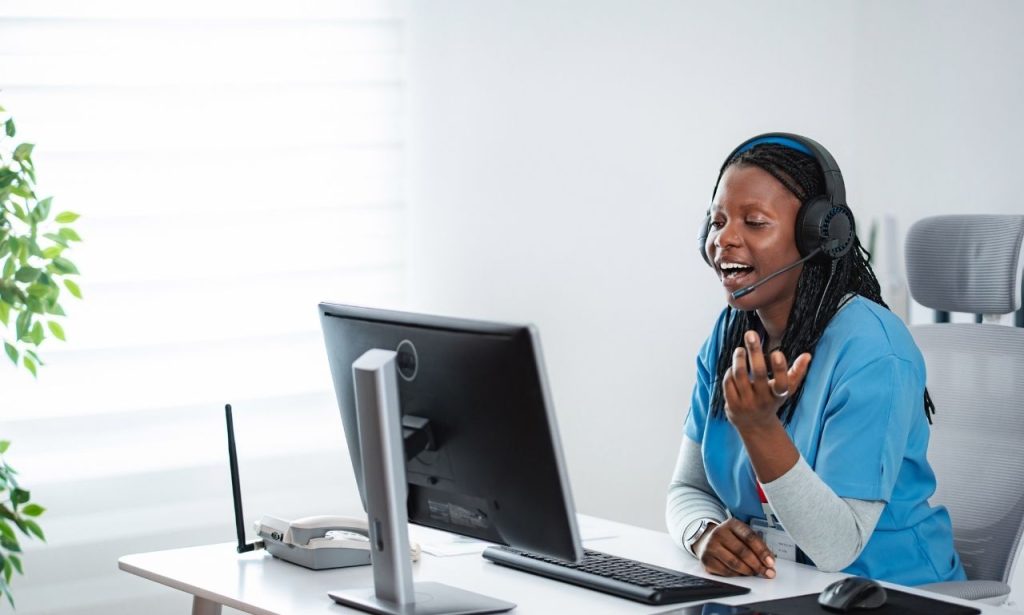
Healthcare professionals generally follow a structured process when communication suddenly stops.
The first step is usually observation. Providers wait briefly to determine whether the patient reconnects on their own. Since many interruptions last less than a minute, immediate action is often unnecessary.
When the patient does not return, providers typically attempt direct contact. A phone call is the most common approach because it allows immediate communication regardless of internet availability.
Some clinics send text messages or secure patient portal notifications instead. The exact method depends on the healthcare organization’s communication policies.
The provider’s next decision depends largely on the type of appointment involved. If the visit primarily involves discussion, continuing by phone may be perfectly reasonable. If visual assessment is required, rescheduling may become necessary.
What remains consistent across most healthcare settings is the effort to maintain continuity of care whenever possible.
Can a Telehealth Appointment Continue as a Phone Call?
Many virtual appointments can continue without video.
Mental health appointments provide a good example. While video communication offers valuable visual cues, many counseling and therapy sessions remain productive through voice-only conversations.
Medication management appointments also frequently transition to telephone communication when video technology fails. Providers can discuss side effects, dosage adjustments, and treatment progress without necessarily needing visual information.
Primary care follow-ups often fall into the same category. If the purpose of the appointment is to review lab results or discuss ongoing symptoms, a phone conversation may provide everything needed.
However, certain specialties depend heavily on visual evaluation. Dermatologists often need to see skin conditions directly. Physical therapists observe movement patterns and range of motion. Neurologists may assess facial expressions, balance, or coordination.
In these situations, a simple phone call may not provide enough clinical information to support appropriate decision-making.
What Happens to Billing If the Appointment Is Interrupted?
Billing concerns often arise whenever technology interferes with healthcare services.
The answer varies depending on several factors, including how much of the appointment was completed, the provider’s policies, and the patient’s insurance coverage.
If the appointment resumes successfully after a brief interruption, billing generally proceeds as normal. A few minutes of downtime rarely changes how the visit is documented or coded.
More complex situations arise when the session cannot continue. Some providers charge based on the time spent delivering care. Others may choose to reschedule without additional fees if technical issues prevented meaningful interaction.
Insurance companies also maintain different reimbursement requirements. Some plans recognize audio-only appointments under certain conditions. Others require video communication for specific services.
Because healthcare billing rules can be complex, patients should contact their provider’s billing department whenever questions arise rather than relying on assumptions.
Why Providers Verify Your Location Before Telehealth Visits
Patients sometimes wonder why telehealth providers ask where they are located at the beginning of an appointment.
The answer becomes especially important when technical disruptions occur.
Unlike traditional office visits, telehealth providers cannot physically see where patients are located. If an emergency develops during the session, healthcare professionals need accurate location information to coordinate assistance.
This is particularly important in mental health care. If a patient expresses thoughts of self-harm or experiences a mental health crisis before the connection drops, the provider may need to initiate emergency protocols.
The same principle applies to certain medical emergencies. A patient experiencing severe symptoms may require immediate intervention if communication suddenly ends.
Location verification helps providers act quickly if they lose contact during a potentially dangerous situation.
Does a Disconnected Appointment Affect Medical Records?
One concern patients rarely think about until a disruption occurs involves medical documentation.
Fortunately, modern healthcare systems are designed to preserve information even when appointments encounter technical difficulties.
Providers typically document conversations throughout the encounter rather than waiting until the very end. Notes entered before the interruption remain securely stored within the electronic health record.
This means important information does not disappear simply because the video call ended unexpectedly.
If the appointment resumes, the provider continues documenting normally. If the visit must be rescheduled, those existing notes provide context for future discussions.
Treatment recommendations, prescription decisions, referrals, and diagnostic observations are also generally preserved once they have been recorded.
A disconnected session may interrupt communication, but it rarely compromises the patient’s medical record.
Common Telehealth Problems and How Patients Can Avoid Them
Most telehealth issues follow familiar patterns.
Video freezing often indicates insufficient bandwidth. Audio delays frequently stem from unstable internet connections. Camera failures may result from browser permission settings. Application crashes can occur when devices run outdated software.
While some disruptions are unavoidable, many can be prevented with simple preparation.
Testing equipment before the appointment remains one of the most effective strategies. Most telehealth platforms offer system checks that confirm camera, microphone, and internet functionality.
Updating browsers and operating systems helps reduce compatibility problems. Closing unnecessary applications can improve device performance.
Choosing a quiet environment also matters. A strong internet connection is helpful, but minimizing distractions allows both patient and provider to focus on the conversation.
Small preparations often prevent larger frustrations later.
How to Reduce the Risk of Future Telehealth Disconnections
Telehealth works best when patients treat the appointment with the same preparation they would give an in-person visit.
A stable internet connection should be a priority. Whenever possible, use a trusted home network rather than public Wi-Fi. Positioning yourself closer to the router can improve reliability.
Device preparation is equally important. Ensure batteries are charged, software is updated, and cameras function properly before the appointment begins.
Patients should also keep important contact information nearby. Having the clinic’s phone number readily available can save valuable time if a technical problem develops.
It helps to join appointments a few minutes early as well. This provides an opportunity to identify and resolve minor technical issues before the provider enters the session.
No system is perfect. However, thoughtful preparation significantly reduces the likelihood of major disruptions.
Conclusion
Understanding what happens if a telehealth appointment gets disconnected can eliminate much of the uncertainty that surrounds virtual healthcare. In most situations, a dropped connection does not end the appointment, erase medical information, or prevent patients from receiving care. Providers routinely manage technical disruptions and often have multiple backup options available, including reconnection procedures, phone calls, and rescheduling when necessary. As telehealth continues to grow, occasional technical problems will remain part of the experience. Fortunately, they are usually manageable and rarely interfere with the quality of care patients receive.
Also Read: Can AI Predict Health Problems Before Symptoms Develop?
FAQs
Yes. Most telehealth platforms allow patients to reconnect using the original appointment link as long as the session remains active.
Many providers attempt to contact patients directly by phone if they do not reconnect within a reasonable amount of time.
Sometimes. Mental health appointments, medication reviews, and certain follow-up visits may continue by phone, depending on the provider and insurance requirements.
Not necessarily. Many appointments resume after reconnection, and some can continue through alternative communication methods if video service remains unavailable.
