
A wearable can collect thousands of measurements while its owner sleeps and reduce them to a single number by breakfast. Daily Readiness Scores offer that simplicity: instead of interpreting heart rate, sleep duration, activity, and recovery separately, the user receives one apparent answer about how prepared the body is for the day. The number, however, is the end of an estimation process rather than a direct measurement of readiness itself.
Readiness Is Not Something a Sensor Measures Directly
Wearables can measure or estimate physiological signals, but there is no single biological variable called “readiness” that a watch detects.
The score is constructed.
An app takes several measurements, compares them with expected patterns, applies an algorithm, and produces a simplified indicator.
Different platforms use different combinations of data and give those variables different importance.
One system might emphasize heart rate variability and sleep. Another may incorporate recent exercise, resting heart rate, temperature trends, or previous recovery.
Two devices can therefore examine the same person and produce different assessments without either device necessarily malfunctioning.
They are applying different models to a complicated physiological state.
Personal Baselines Make the Data More Meaningful
Many health measurements vary substantially between individuals.
Heart rate variability provides a useful example. A value that is ordinary for one person can be unusual for another.
This makes comparison with a personal baseline especially important.
Wearables can collect data repeatedly over days and weeks, gradually learning what appears typical for the individual.
Suppose a user’s overnight resting heart rate normally remains within a relatively narrow range. A noticeable increase may carry more information than comparing that person with a population average.
The same principle can apply to sleep patterns, activity, respiratory measurements, and other signals.
A readiness score therefore becomes more informative after the system has accumulated enough data to recognize the user’s usual patterns.
That is one reason a brand-new device may have limited context.
Heart Rate Provides One Piece of the Picture
Optical sensors in many consumer wearables estimate heart rate by detecting changes associated with blood flow near the skin.
Heart rate can provide useful information about cardiovascular activity.
For readiness calculations, resting or overnight measurements may be particularly relevant because they are less affected by immediate physical activity.
A higher-than-usual resting heart rate can occur for numerous reasons.
Recent strenuous exercise, poor sleep, psychological stress, dehydration, illness, alcohol consumption, heat, and other factors may contribute.
That lack of specificity matters.
A change does not automatically explain its own cause.
Readiness algorithms therefore tend to become more useful when heart rate is interpreted alongside additional information rather than treated as a standalone diagnosis.
Heart Rate Variability Can Reflect Changing Physiological State
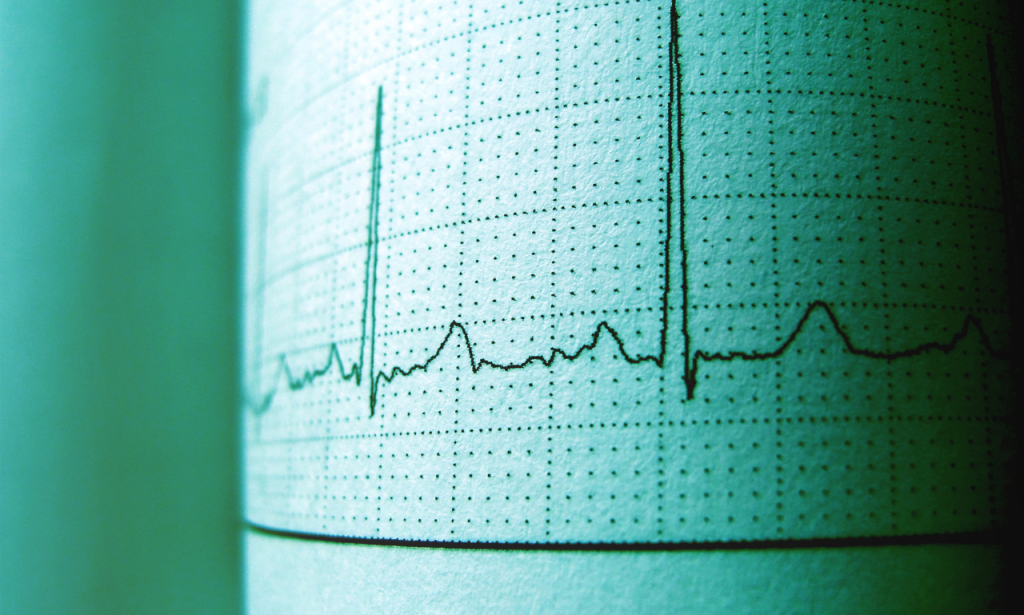
Heart rate is not perfectly regular.
The intervals between consecutive beats vary slightly, and this variation can be summarized through measurements collectively described as heart rate variability, or HRV.
Consumer health platforms increasingly use overnight HRV because changes relative to a person’s baseline can provide information associated with recovery and autonomic nervous system activity.
Interpretation requires caution.
HRV can be affected by exercise, sleep, alcohol, stress, illness, age, measurement conditions, and numerous individual factors.
Higher is not universally “better” in every circumstance, and comparing raw values between people can be misleading.
Readiness systems generally gain more from identifying changes within the same person over time.
A temporary departure from baseline becomes one input among several rather than an independent conclusion about health.
Sleep Data Carries Significant Weight
Recovery scores often depend heavily on sleep because sleep influences physical and cognitive functioning.
Wearables may estimate total sleep duration, sleep timing, interruptions, and sometimes sleep stages.
These estimates are typically generated from combinations of movement and physiological signals rather than direct observation of the brain activity used in clinical sleep studies.
That distinction is important.
A wearable can provide useful longitudinal information without reproducing a sleep laboratory.
Readiness algorithms may compare the night’s estimated sleep with the user’s usual pattern or an internally defined target.
Short or disrupted sleep can lower a score even if other signals appear normal.
Conversely, a long night in bed does not guarantee excellent recovery if the recorded physiological patterns differ substantially from the person’s baseline.
Sleep Stages Are Estimates
Consumer devices often display attractive charts dividing the night into light, deep, and REM sleep.
Those categories can make the data appear extremely precise.
The underlying measurements are indirect.
Clinical sleep staging typically relies on multiple physiological signals measured using specialized equipment. Wrist-worn devices have a more limited set of observations from which to infer sleep stages.
Algorithms use patterns in movement, heart activity, and other available signals to estimate what may have been happening.
This does not make wearable sleep information useless.
Its strength often lies in observing patterns repeatedly under ordinary conditions.
The limitation is that an estimated sleep-stage chart should not automatically be interpreted as a clinical measurement.
A readiness score built partly from those estimates inherits some of their uncertainty.
Recent Exercise Changes the Recovery Calculation
Readiness is partly about the relationship between stress and recovery.
Physical training deliberately creates stress.
A challenging workout can produce fatigue that requires time to resolve. If several demanding sessions occur close together, accumulated training load may influence how prepared someone feels for another intense effort.
Health and fitness apps may therefore consider recent activity.
Duration, heart-rate response, intensity estimates, training frequency, and other measures can contribute to the calculation.
This creates a dynamic system.
A workout that improves long-term fitness can temporarily lower next-day readiness.
That is not necessarily a negative outcome. Adaptation requires an appropriate relationship between training and recovery.
The score is attempting to describe short-term status, not declare whether exercise itself was beneficial.
Temperature Trends Can Add Context
Some wearables can detect changes in skin temperature, often during sleep.
Absolute skin temperature varies with environment, device placement, circulation, and other factors.
For that reason, trends relative to an individual’s baseline may be more informative than a single reading.
A departure from normal patterns can occur for many reasons, including environmental changes and physiological processes.
Some platforms incorporate these deviations into broader recovery calculations.
Again, the measurement is nonspecific.
A temperature change does not automatically identify illness or another particular cause.
Its usefulness comes from adding another piece of information that can be considered alongside heart rate, HRV, sleep, and recent activity.
Respiratory Measurements Can Reveal Departures From Normal
Certain devices estimate breathing rate during sleep.
For many people, overnight respiratory patterns can remain relatively stable over time.
An unusual change may therefore attract the algorithm’s attention.
But respiratory rate is influenced by several factors, and consumer wearables have measurement limitations.
A readiness model may respond to a change without knowing exactly why it happened.
That distinction illustrates how these systems generally operate.
They are often better at recognizing that today’s pattern looks different from the user’s established pattern than at determining the precise cause of that difference.
The score summarizes deviation.
Interpretation still requires context.
Algorithms Weight Signals Differently
Once the data has been collected, the platform needs to decide how much each variable matters.
This is where proprietary algorithms become important.
Imagine a user who slept poorly but has a normal resting heart rate and HRV. Another person slept well but shows unusual physiological measurements.
Which individual should receive the lower readiness score?
There is no universally required answer.
The result depends partly on how the algorithm weights the available evidence.
Platforms can also change their algorithms through software updates. The same underlying sensor measurements may then produce a somewhat different score.
Users should therefore avoid treating readiness numbers from different products as directly interchangeable.
A score of 80 on one platform is not necessarily equivalent to 80 on another.
Sensor Quality Places Limits on the Calculation
An algorithm cannot completely escape the quality of its inputs.
Wearables operate outside controlled laboratories.
Device fit, movement, skin contact, sensor placement, environmental conditions, and other factors can affect measurements.
Missing data can create additional problems.
Someone who removes a wearable for several hours may leave the algorithm with an incomplete picture of activity or recovery.
Software can attempt to detect poor-quality measurements and exclude unreliable periods, but no consumer sensor produces perfect data continuously.
This is why trends are often more informative than isolated readings.
Repeated observations can make the broader pattern visible even when individual measurements contain some noise.
A Single Low Score Does Not Explain the Cause
One morning the app may report poor readiness.
That result can feel authoritative because it compresses complicated data into a clear number.
The number cannot necessarily explain what happened.
A hard workout the previous day may be relevant. So could unusually short sleep, alcohol, emotional stress, travel, heat, illness, or measurement error.
Several factors may occur simultaneously.
The useful response is often contextual rather than alarmed.
What changed?
Was yesterday unusual?
Has the pattern appeared repeatedly?
Do subjective feelings agree with the device?
One abnormal score carries different meaning from a persistent change across several days accompanied by noticeable symptoms.
Subjective Experience Still Matters
Wearables can measure signals that people cannot easily observe themselves.
They cannot completely measure how someone feels.
Muscle soreness, motivation, perceived fatigue, mood, pain, mental concentration, and general sense of wellbeing provide additional information.
Sometimes the device and the person agree perfectly.
After a difficult workout and poor night’s sleep, both may indicate reduced recovery.
Other times they conflict.
Someone can feel energetic despite a mediocre score, or feel exhausted while the app reports excellent readiness.
Neither source should automatically erase the other.
The disagreement can itself be informative.
A digital score is most useful as another observation about the body, not a replacement for every other source of information.
Lifestyle Factors Can Move Several Metrics at Once
Readiness scores can sometimes reveal the combined effects of ordinary behaviors.
Alcohol, for example, may affect sleep and overnight cardiovascular measurements in some individuals.
Late meals, travel, unusual exercise, psychological stress, and changes in sleep timing can also alter multiple variables.
Because wearables collect information repeatedly, users may begin noticing personal patterns.
The important word is personal.
An association observed over several nights does not necessarily prove a single behavior caused the change. Several factors often occur together.
Still, longitudinal tracking can generate useful hypotheses.
Someone may notice that certain routines consistently coincide with worse sleep and lower next-day recovery. That observation can guide further attention without turning the app into a diagnostic system.
Readiness Scores Can Influence Behavior in Both Directions
A score can help people recognize when recovery may deserve attention.
It can also influence perception.
Seeing a low number first thing in the morning may cause someone to interpret ordinary tiredness more negatively than they otherwise would.
A high score can have the opposite effect.
This creates an important psychological dimension to health tracking.
Measurements do not merely describe behavior; once displayed, they can change behavior.
For some users, that feedback supports healthier routines.
Others may become overly focused on achieving perfect numbers, repeatedly checking metrics or worrying about small fluctuations.
The usefulness of tracking depends partly on whether the information improves decisions rather than increasing unnecessary concern.
Trends Are Usually More Informative Than Daily Fluctuations
Bodies vary from day to day.
So do sensors.
A single readiness score therefore has limited context.
Several weeks of data can reveal much more.
A user may discover that resting heart rate gradually returns toward baseline after demanding training. Sleep duration may consistently decline during certain work schedules. HRV may fluctuate around a stable personal range.
Patterns help separate ordinary variability from sustained change.
This is where wearable technology has one of its clearest practical strengths: repeated measurement.
Clinical tests can provide far more controlled information, but they are not performed every night for most people.
Consumer devices trade some precision for frequency and convenience.
That makes longitudinal interpretation especially important.
Readiness Is Not a Medical Diagnosis
A low readiness score does not diagnose infection, overtraining, heart disease, a sleep disorder, or another medical condition.
Likewise, a high score does not prove that someone is healthy.
Consumer wearables provide information within the limits of their sensors and algorithms.
Persistent or concerning symptoms deserve appropriate medical attention regardless of what an app reports.
Chest pain, significant breathing difficulty, fainting, or other potentially urgent symptoms should not be dismissed because a wearable displays reassuring numbers.
The reverse is also true.
An unusual consumer-device reading without symptoms does not automatically establish that a medical problem exists.
Health data becomes most useful when its purpose and limitations remain clear.
Conclusion
The most impressive feature of a readiness score is also its greatest source of misunderstanding: complexity disappears. Numerous measurements, baseline comparisons, and algorithmic decisions become one clean number that appears far more certain than the process behind it.
Health apps turn sensor data into daily readiness scores by combining signals such as sleep, heart rate, HRV, activity, temperature trends, and other available measurements. The resulting number is an interpretation of those inputs, shaped by the platform’s algorithm and the quality of the underlying data.
Used thoughtfully, readiness scores can make long-term patterns easier to notice and encourage people to consider recovery alongside activity. Their value is strongest when the score begins a closer look at what has changed rather than ending the conversation with a verdict about what the body can or cannot do.
Also Read: Why Does Your Balance Improve When You Exercise Regularly?
FAQs
Depending on the device, inputs may include sleep, resting heart rate, HRV, recent activity, temperature trends, respiratory measurements, and personal baseline data.
Physiological measurements can vary before those changes become noticeable subjectively, while normal sensor and day-to-day variation can also affect the score.
They are consumer wellness estimates rather than medical diagnoses, and their accuracy depends on the sensors, algorithms, data quality, and metric being measured.
Long-term patterns generally provide more context because individual daily readings can be affected by normal variation, unusual circumstances, and measurement noise.
