
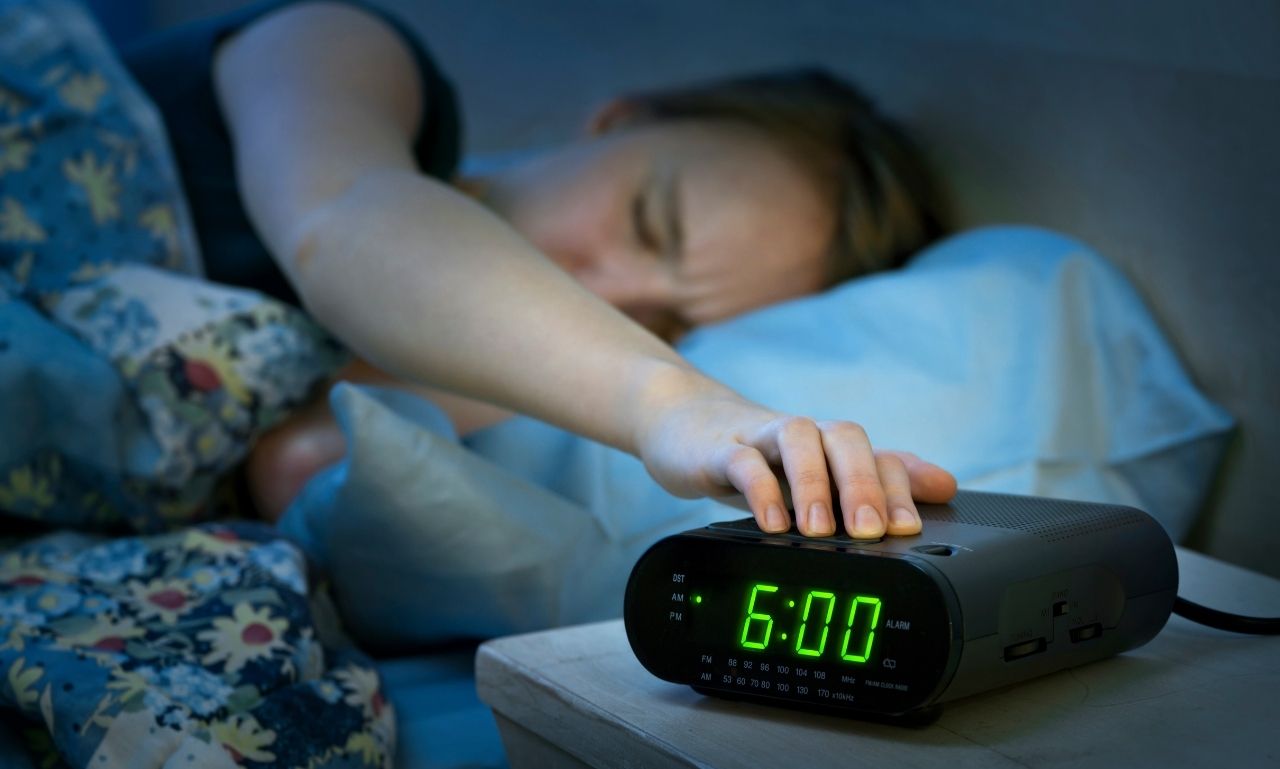
You go to bed tired, fall asleep without much trouble, and then find yourself staring at the ceiling at exactly the same hour night after night. For some people it’s 2 a.m. For others it’s 3:17 a.m. or 4 a.m. Whatever the time, the pattern is hard to ignore. If you’ve been wondering, “Why do I wake up at the same time every night?” the answer often lies in a combination of biology, habits, stress, and sleep quality rather than a single hidden cause.
Why Waking Up at the Same Time Every Night Feels So Unusual
Most people assume they sleep straight through the night. In reality, sleep isn’t one continuous state. The brain moves through several stages, and brief awakenings happen more often than many realize.
The difference is that most awakenings are forgotten almost immediately. You may open your eyes for a few seconds, shift positions, and drift back to sleep without forming a memory of it. When you repeatedly wake at the same time, however, the pattern becomes noticeable.
That’s what makes these wake-ups feel different. It isn’t necessarily that they are more serious. It’s that they become memorable.
After a few nights, many people begin checking the clock. Then they start expecting the wake-up. Eventually, the body and mind seem locked into a routine that feels impossible to break.
Your Body Is Built Around Predictable Rhythms
The human body likes schedules more than most people realize. Deep inside the brain sits a biological clock that regulates sleep and wakefulness throughout the day.
How Circadian Rhythms Affect Nighttime Wake-Ups
This internal clock, known as the circadian rhythm, responds to light, darkness, meal timing, physical activity, and daily routines. It helps determine when you feel sleepy, when you feel alert, and even when certain hormones are released.
If your body becomes accustomed to operating on a predictable schedule, it may also begin expecting certain sleep patterns. Sometimes that expectation contributes to waking up at roughly the same time every night.
A person who consistently goes to sleep at 10 p.m. and wakes at 6 a.m. develops a very different rhythm from someone whose schedule changes every day. The more consistent your routine becomes, the more predictable your body’s responses often are.
What Happens During Sleep Cycles
Sleep unfolds in a series of repeating cycles rather than one long stretch of rest. Each cycle lasts roughly 90 minutes and includes periods of light sleep, deep sleep, and rapid eye movement sleep.
Why Sleep Transitions Matter
Many nighttime awakenings occur during transitions between these stages. As the brain shifts from one phase to another, sleep becomes lighter. During these moments, even minor disturbances can trigger wakefulness.
A distant noise, a slight change in room temperature, or an uncomfortable sleeping position may be enough to pull you awake.
If those transitions occur around the same time each night, your awakenings can appear remarkably consistent. What feels like an internal alarm clock may simply be your brain reaching a lighter stage of sleep at a predictable point in the night.
Stress Often Shows Up After You Fall Asleep

One of the most common causes of repeated nighttime awakenings has little to do with sleep itself.
It has to do with stress.
Many people expect stress to keep them from falling asleep. Sometimes it does. Just as often, people fall asleep without difficulty only to wake up several hours later with a racing mind.
Why Anxiety Can Trigger Early-Morning Wakefulness
Stress affects the nervous system in ways that continue long after bedtime. When the body remains on high alert, sleep becomes lighter and easier to interrupt.
Thoughts that seemed manageable during the day often feel louder in the quiet hours of the night. A work deadline, financial concern, relationship issue, or unresolved problem can suddenly demand attention at 3 a.m.
This doesn’t mean you’re consciously worried every moment of the day. The body can carry stress even when the mind believes everything is under control.
That hidden tension often reveals itself through disrupted sleep.
The Truth About Waking Up at 3 A.M.
Few sleep experiences are discussed as often as the mysterious 3 a.m. wake-up.
Online forums are full of theories ranging from spiritual explanations to warnings about hidden health issues. While these ideas attract attention, sleep science offers a simpler explanation.
Why 3 A.M. Is Such a Common Wake-Up Time
By the early morning hours, your body has already completed several sleep cycles. Deep sleep becomes less dominant, and lighter sleep stages become more frequent.
At the same time, hormones begin preparing the body for the approach of morning. These changes naturally make sleep more fragile.
For someone dealing with stress, alcohol consumption, inconsistent sleep schedules, or environmental disturbances, this period creates an ideal opportunity for waking up.
The specific hour itself usually isn’t the issue. It’s what is happening within your body at that point in the night.
Everyday Habits That Quietly Disrupt Sleep
Sometimes the cause isn’t medical or psychological. Sometimes it’s hidden in everyday routines.
Alcohol, Caffeine, and Late-Night Eating
Alcohol often makes people feel sleepy at first, which creates the impression that it helps with sleep. The reality is more complicated.
As alcohol is processed, sleep becomes fragmented. Many people find themselves waking during the second half of the night and struggling to return to sleep.
Caffeine can create similar problems. Because it remains in the body for hours, that afternoon coffee may still be influencing sleep long after bedtime.
Late-night meals can also play a role. Digestive activity, acid reflux, or blood sugar fluctuations may interfere with normal sleep patterns and contribute to repeated awakenings.
Individually, these habits may seem harmless. Combined, they can significantly affect sleep quality.
When Your Environment Becomes the Problem
People often focus on what is happening inside their bodies while overlooking what is happening around them.
The sleeping environment has a powerful influence on sleep continuity.
Small Disturbances That Create Big Problems
A room that becomes too warm overnight can trigger awakenings. The same is true for outside noise, bright streetlights, a partner’s movements, or even a pet that becomes active during the night.
The challenge is that these disturbances may occur at nearly the same time every night.
Perhaps a heating system switches on at 3 a.m. Perhaps garbage collection starts before dawn. Perhaps a neighbor leaves for work at the same hour every morning.
When an environmental trigger repeats consistently, your wake-up time often does as well.
Medical Conditions Linked to Repeated Nighttime Awakenings
Sometimes waking up at the same time every night points to an underlying health issue.
Sleep Disorders and Other Health Concerns
Sleep apnea is one of the most common examples. This condition causes repeated pauses in breathing during sleep, often leading to brief awakenings that disrupt normal sleep architecture.
Acid reflux can produce similar effects. Stomach acid moving into the esophagus may wake a person suddenly, particularly during certain stages of digestion.
Other possible contributors include restless legs syndrome, chronic pain conditions, thyroid disorders, menopause, and certain medications.
While these conditions do not always cause wake-ups at exactly the same time, they frequently create recurring patterns of sleep disruption.
If awakenings occur regularly and are accompanied by daytime fatigue, medical evaluation may be worthwhile.
How to Break the Cycle
Once a wake-up pattern becomes established, many people focus entirely on the nighttime event itself. In reality, the solution often begins during the day.
Practical Changes That Improve Sleep Continuity

A consistent sleep schedule remains one of the most effective strategies. Going to bed and waking up at similar times helps strengthen the body’s natural rhythms.
Limiting caffeine later in the day can also help. For some people, this means avoiding caffeine after lunch. Others may need an even earlier cutoff.
Managing stress is equally important. Regular exercise, mindfulness practices, journaling, and relaxation techniques can reduce nervous system arousal before bedtime.
It’s also worth avoiding the habit of checking the clock during nighttime awakenings. Watching the minutes pass tends to increase frustration, making it harder to fall asleep again.
The goal isn’t to force sleep. It’s to create conditions that allow sleep to happen naturally.
Knowing When to Seek Professional Help
A few nighttime awakenings each week are not usually cause for concern. Sleep is rarely perfect, and occasional disruptions happen to everyone.
The situation becomes different when awakenings are frequent, persistent, or affect daily life.
People who experience excessive daytime sleepiness, concentration problems, mood changes, loud snoring, breathing pauses, or chronic insomnia should consider speaking with a healthcare professional.
Sleep specialists can identify issues that are difficult to recognize on your own and recommend treatments based on the underlying cause rather than the symptoms alone.
Conclusion
If you’ve been asking yourself, “Why do I wake up at the same time every night?” you’re far from alone. In many cases, the explanation involves a combination of sleep cycles, circadian rhythms, stress, lifestyle habits, and environmental factors. While repeated nighttime awakenings can be frustrating, they are often manageable once the underlying pattern becomes clear. Understanding what may be triggering the wake-up is the first step toward restoring deeper, more consistent sleep and finally making those middle-of-the-night clock checks a thing of the past.
FAQs
Stress, anxiety, hormonal changes, and poor sleep habits are common reasons. Once the brain becomes fully alert, returning to sleep can be difficult.
It can be. Many people wake during the early morning hours because sleep naturally becomes lighter as morning approaches.
Mild dehydration may contribute to discomfort or thirst that interrupts sleep, although it is not one of the most common causes.
Not necessarily. However, if the pattern causes daytime fatigue, affects your quality of life, or continues for several weeks, it may be worth discussing with a healthcare professional.
