
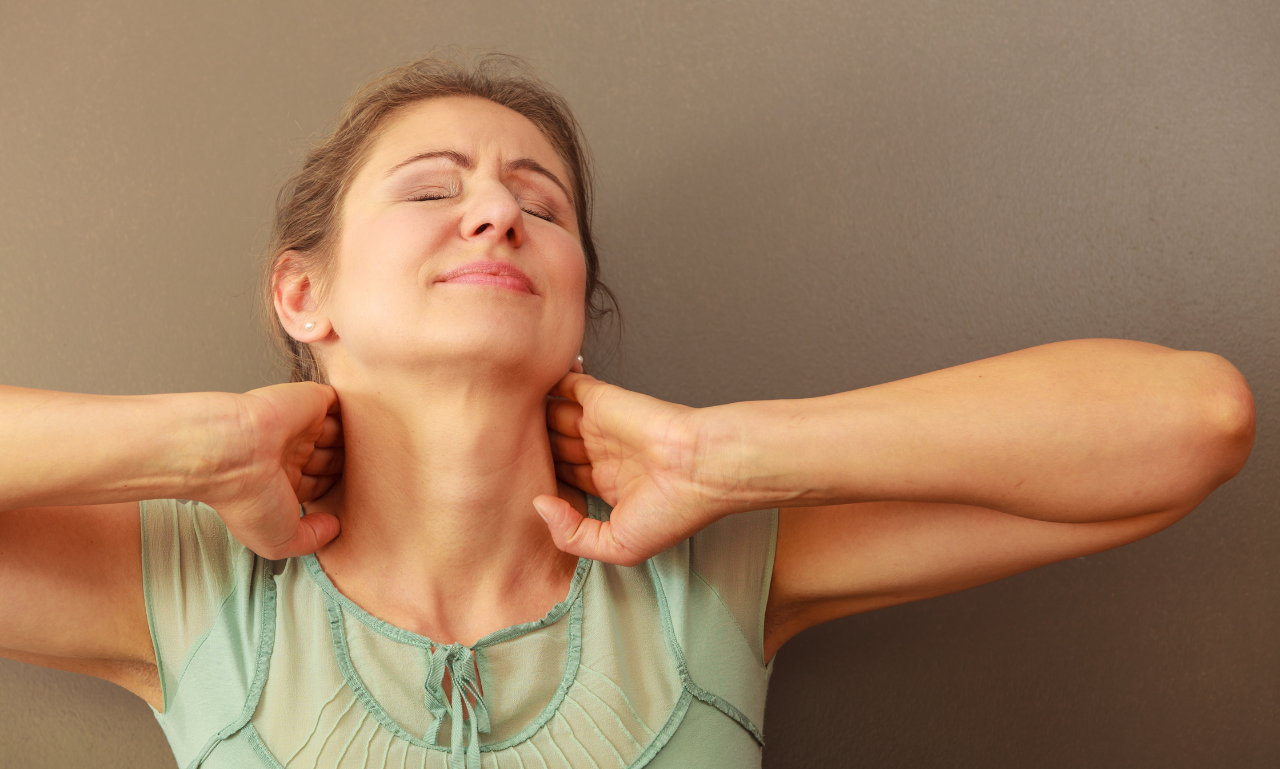
A stiff shoulder that barely registers over breakfast can become difficult to ignore by dinner. Knees may feel heavier, the lower back tighter, and yesterday’s minor muscle soreness surprisingly prominent after a full day of otherwise ordinary activity. Minor Aches Feel Worse as the day progresses for several reasons, because pain is not a static signal that remains proportional to tissue condition from morning to night. Movement, muscle fatigue, prolonged positions, stress, swelling, sleep, and the nervous system’s changing sensitivity can all influence how discomfort feels. That is why the clock can seem to make a small ache considerably louder.
Pain Changes Even When the Injury Does Not
It is natural to assume that increasing discomfort means the underlying problem must be getting worse.
Sometimes it does. Often, however, pain intensity changes without a comparable change in tissue damage.
Pain is produced through interactions between sensory signals, the nervous system, the brain, previous experiences, emotional state, and the surrounding situation. A mildly irritated area can therefore feel different at different points in the same day.
Physical load is part of the explanation.
So are attention and fatigue.
A person may barely notice a sore back during an absorbing morning meeting but become acutely aware of it while sitting quietly that evening.
This variability does not make the pain imaginary. It shows that the experience of pain is influenced by more than the condition of one muscle, joint, or tendon.
Daily Activity Creates Cumulative Physical Load
Most people accumulate thousands of movements between waking and bedtime.
Walking, climbing stairs, lifting objects, working, exercising, cooking, commuting, and standing all place mechanical demands on the body.
Each individual activity may be well within normal capacity.
Together, they create cumulative load.
An already sensitive knee, ankle, shoulder, or back may tolerate the first few hours comfortably but become more noticeable after repeated use.
This pattern is particularly common when activity has recently increased.
Someone who suddenly spends an entire weekend gardening may experience relatively mild discomfort early the next day and more noticeable soreness after another day of moving around.
The underlying issue has not necessarily deteriorated during those hours. The tissues have simply been asked to keep working while they are already recovering.
Why Minor Aches Feel Worse as Muscles Become Fatigued
Muscles help stabilize joints and maintain posture throughout the day.
As they fatigue, performing the same task can require greater effort.
Consider the muscles supporting the neck and upper back during computer work. Early in the day, maintaining a seated position may feel effortless. After hours of sustained activity, those muscles can become tired and uncomfortable.
Fatigue can also change movement patterns.
A person may begin slouching, shifting weight, or relying more heavily on other muscles. Those compensations can distribute forces differently and make previously quiet areas noticeable.
This helps explain why discomfort can emerge even when someone has not performed obvious strenuous exercise.
Holding a relatively low-level muscular contraction for hours can be demanding in its own way.
Prolonged Sitting Can Be as Relevant as Heavy Activity

An exhausting day does not have to involve physical labor.
Remaining in one position for long periods can contribute to stiffness and discomfort.
Office workers may spend hours with their hips and knees flexed while their neck and shoulders remain in relatively fixed positions. Long-distance drivers experience similar demands.
The problem is not that sitting is inherently damaging.
Rather, the body generally tolerates movement and variation better than prolonged repetition of the same posture.
People often search for one “perfect” posture that will prevent all discomfort. In practice, changing position regularly may be more realistic than trying to maintain an idealized pose throughout the day.
Even a technically good working position can become uncomfortable when held long enough.
By evening, the cumulative effect can make mild neck, hip, or back symptoms considerably more apparent.
Standing All Day Creates a Different Kind of Fatigue
Jobs involving prolonged standing create another pattern.
Muscles in the legs and trunk continually make small adjustments to maintain balance. Feet repeatedly bear body weight, while joints experience sustained loading.
People who work in retail, healthcare, hospitality, manufacturing, and similar occupations may notice aching feet, legs, or lower backs late in a shift.
Standing still can sometimes feel harder than walking because movement allows forces to shift continuously between structures.
Footwear and floor surfaces can also influence comfort.
Again, an evening ache does not automatically mean injury has occurred. It can reflect accumulated physical demand.
Persistent or progressively worsening pain, however, deserves a different level of attention than predictable mild fatigue that resolves with rest.
Fluid Can Accumulate in the Lower Body
Gravity influences fluid distribution.
During hours spent upright, some fluid can accumulate in the lower legs and feet. Mild swelling may become more noticeable toward evening, particularly after prolonged sitting or standing.
Heat can intensify the effect because blood vessels near the skin expand.
For some people, this increased fullness or swelling contributes to sensations of heaviness, tightness, or aching.
Ordinary mild swelling that improves after rest can have relatively simple explanations, but swelling deserves attention when it is substantial, sudden, painful, one-sided, or associated with other symptoms.
The important point is that the physical state of the body genuinely changes across the day.
Morning and evening are not physiologically identical conditions.
Previous Exercise Can Become More Noticeable Later
Exercise-related muscle soreness does not always remain constant throughout the day.
A person recovering from an unfamiliar workout may wake feeling reasonably comfortable. Once they begin walking, climbing stairs, lifting, or repeating movements involving the affected muscles, soreness becomes harder to ignore.
Delayed-onset muscle soreness can develop after unfamiliar or demanding exercise, particularly when movements involve significant eccentric muscle actions.
The discomfort often becomes noticeable hours after the activity rather than immediately.
Daily movement can then repeatedly remind the person that those muscles are recovering.
This is one reason post-exercise soreness may seem to intensify during a working day even without another formal workout.
Repetitive Movements Add Up Quietly
Not all overuse involves athletics or heavy manual work.
Typing, using a mouse, handling tools, lifting small objects, playing an instrument, or repeatedly reaching overhead can involve hundreds or thousands of similar movements.
Each repetition may feel trivial.
The accumulated demand can make sensitive tissues increasingly noticeable.
This is particularly relevant when workload changes suddenly. A person accustomed to two hours of a particular activity may respond differently after doing it for eight.
Technique, equipment, breaks, physical conditioning, and individual anatomy all influence tolerance.
Repeated discomfort does not automatically establish a repetitive-strain injury, but the timing of symptoms can provide useful information about which activities contribute.
Stress Can Increase Muscle Tension
A stressful day can leave the body feeling physically different.
People may tighten their jaw, raise their shoulders, clench muscles, or maintain a guarded posture without realizing it.
These low-level contractions can persist for extended periods.
By evening, the jaw, neck, shoulders, or back may feel tired or sore even though no obvious physical event caused the discomfort.
Stress can also influence how the nervous system processes pain.
When someone is tense, worried, or mentally exhausted, minor sensations may become more difficult to ignore.
The relationship works in both directions. Persistent pain can increase stress, while stress can increase the burden of pain.
This interaction helps explain why a physically ordinary but emotionally difficult day can produce surprisingly intense evening discomfort.
Mental Fatigue Changes Pain Perception
Self-regulation requires cognitive resources.
Throughout the day, people manage deadlines, decisions, conversations, distractions, and emotional reactions. By evening, mental fatigue can reduce the ability to direct attention away from discomfort.
An ache that remained in the background earlier may move to the foreground.
Context matters too.
During a busy afternoon, attention is occupied by external tasks. Once those demands disappear, internal sensations become easier to notice.
This phenomenon is familiar beyond pain.
People sometimes become more aware of ringing in their ears, itching, hunger, or other bodily sensations when the environment becomes quiet.
The discomfort was not necessarily absent earlier. Competition for attention was simply stronger.
Expectations Can Influence the Experience
Previous experience shapes how people interpret physical sensations.
If someone’s back routinely hurts after work, they may begin anticipating the discomfort as the afternoon progresses.
Expectation can increase attention to the relevant body area.
This does not mean the person is causing the pain through thought. Instead, the nervous system uses prior experience to interpret incoming information.
Pain is partly predictive.
The brain continuously evaluates whether bodily signals may indicate threat or require protection.
When a familiar sensation has previously been associated with significant discomfort, the system may become more attentive to early signals.
This can contribute to persistent pain patterns in which relatively ordinary physical sensations acquire greater significance over time.
Poor Sleep Can Lower Pain Tolerance
The previous night can influence how today’s aches feel.
Insufficient or disrupted sleep is associated with changes in pain sensitivity. Someone who slept poorly may find ordinary discomfort harder to tolerate during the following day.
Fatigue also affects mood, concentration, and physical performance.
Muscles may tire sooner, movement may feel more effortful, and coping with discomfort can require more mental energy.
Several nights of poor sleep can magnify these effects.
This creates another possible cycle: pain disrupts sleep, inadequate sleep increases sensitivity to pain, and the following night’s discomfort makes sleeping difficult again.
Improving sleep does not eliminate every physical cause of pain, but sleep quality is an important part of the wider context in which pain occurs.
Inflammation Can Vary Across the Day
Inflammatory processes are influenced by biological rhythms.
Hormones and immune-system activity change across the 24-hour cycle, which can affect symptoms in certain inflammatory conditions.
The timing differs according to the underlying problem.
Some people with particular forms of inflammatory joint disease experience substantial morning stiffness, for example, rather than worsening primarily in the evening.
This is important because not every pain pattern follows the same clock.
Aches that consistently worsen after activity may suggest a different pattern from severe stiffness after prolonged rest.
Timing alone cannot diagnose the cause, but it can provide useful information to a healthcare professional when combined with the location, duration, triggers, swelling, and other symptoms.
Footwear Can Become Less Comfortable Over Hours
Shoes that feel comfortable in the morning may feel tighter later.
Feet can change slightly in volume during the day as prolonged standing, walking, heat, and fluid accumulation take effect.
Footwear that fits poorly can amplify discomfort.
Tight shoes may create pressure points, while inadequate support or cushioning may become more noticeable after hours of use.
The consequences can extend beyond the feet.
People sometimes alter the way they walk when their feet hurt, which can change loads on the ankles, knees, hips, and lower back.
No shoe can prevent every ache, and footwear needs vary substantially by person and activity.
Still, a pattern that appears mainly after long periods in a particular pair of shoes provides a practical clue worth considering.
Age Can Influence Recovery From Daily Load
Aging changes muscles, tendons, joints, and recovery processes, although these changes vary enormously between individuals.
Older adults may notice that a demanding day requires more recovery than it once did.
This does not mean evening aches should simply be dismissed as “getting older.”
Physical activity, strength, body composition, previous injuries, medical conditions, sleep, and overall fitness can matter as much as chronological age.
Maintaining strength and regular movement can support function across the lifespan.
The important distinction is between predictable discomfort associated with unusual exertion and pain that becomes persistent, severe, or functionally limiting.
Age may change recovery, but it should not be used as a blanket explanation that prevents investigation of treatable problems.
Gentle Movement Can Sometimes Feel Better Than Complete Rest
When something aches, complete inactivity can seem like the obvious response.
For many minor forms of stiffness and ordinary muscular discomfort, gentle movement may feel better than remaining completely still.
Movement changes joint positions, activates muscles, and prevents one posture from being maintained indefinitely.
The appropriate level depends on the cause.
A mild stiff back after desk work is very different from an acute injury, severe joint pain, or suspected fracture.
Pain should not automatically be “pushed through.”
The useful principle is proportionality. Ordinary soreness often responds well to manageable movement and recovery, while severe or worsening symptoms call for more caution.
Patterns Matter More Than One Bad Evening
An isolated evening of soreness after an unusually active day is rarely as informative as a repeating pattern.
Tracking when discomfort begins can reveal useful associations.
Does the neck ache only after computer-heavy days? Do the knees hurt after long periods of standing? Does the problem disappear on weekends?
Duration matters too.
A minor ache that consistently resolves after rest differs from pain that progressively worsens, wakes someone repeatedly, or remains present regardless of activity.
Location, swelling, weakness, numbness, fever, injury history, and changes in function add further context.
Pain patterns can guide investigation even when they cannot provide a diagnosis by themselves.
When an Ache Deserves Medical Attention
Minor discomfort is common, but certain features should not simply be attributed to daily fatigue.
Severe or rapidly worsening pain deserves evaluation, particularly after an injury.
Persistent swelling, redness, unusual warmth, fever, significant weakness, numbness, loss of function, or unexplained weight loss can also warrant medical attention depending on the circumstances.
Chest pain, severe breathing difficulty, sudden neurological symptoms, or other potentially urgent symptoms require prompt assessment.
A healthcare professional can also help with less urgent pain that persists for weeks, repeatedly interferes with sleep or work, or steadily limits normal activity.
The fact that discomfort becomes worse in the evening does not determine whether it is harmless. The wider pattern does.
Conclusion
The body carries a record of the day’s demands even when those demands seem unremarkable. Hours of standing, sitting, moving, concentrating, and managing stress can gradually change muscle fatigue, fluid distribution, posture, and the amount of attention available for physical sensations.
Those accumulated influences explain why minor aches can feel worse at the end of the day. The sensation may reflect greater physical load, but its intensity is also shaped by sleep, mental fatigue, nervous-system sensitivity, stress, and the opportunity to finally notice what a busy day kept in the background.
A recurring evening pattern can therefore provide useful information rather than simply something to endure. Understanding what happened during the hours before the discomfort appeared may reveal practical contributors. When pain becomes persistent, unusually severe, or accompanied by concerning symptoms, however, the pattern deserves medical assessment rather than being written off as ordinary end-of-day weariness.
Also Read: Why Older Adults Recover From Illness at Different Speeds
FAQs
Mild evening discomfort can occur after accumulated activity, prolonged positions, muscle fatigue, and daily physical demands.
Yes. Stress can increase muscle tension and influence how strongly the nervous system processes discomfort.
It can. Insufficient or disrupted sleep can make some people more sensitive to pain the following day.
Seek medical advice when pain is persistent, worsening, severe, follows significant injury, limits normal activity, or occurs with concerning symptoms.
